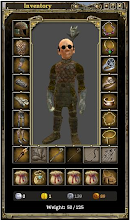
LDoN came as a complete surprise - even a shock - at the time. It fundamentally altered the way EQ was played, dismantling the cultural barricade between "above ground" and "dungeon" players, converting most of the solo and casual population to the kind of group play that had hitherto been seen as the province of the game's self-appointedly more committed and serious players.
I learned more about group play and especially how to start, build, maintain and lead a group in the six months that LDoN provided the backdrop to the EQ zeitgeist than ever before or since. I also made more friends in the game in the first few weeks of that expansion than I'd made in the previous four years. I can think of several periods where my long EQ career could be said to have peaked but LDoN may have been the zenith.
Wilhelm concluded his post by asking a very direct question about the upcoming addition to EVE : "Will it change the game in a good way?". My experience with LDoN was that it not only changed EQ structurally but culturally. The game was never the same again and I would always contend it became a better MMORPG as a direct result of what we all learned in the Lost Dungeons.
 EVE is a very different MMORPG from EverQuest and what's more it's one that I've never played, so I wouldn't presume to speculate on whether or how the introduction of instanced content might change things there, be it for better or for worse. Gevlon has played EVE extensively so it was interesting to see him put his finger on the crucial difference between the two games.
By that, I don't mean the radically different setting - Spaceships instead of Dragons. Nor do I mean the central role played by PvP, or even that the entire game takes place on a single shard instead of well over a dozen. All of those make any comparison between the two games not so much apples and pears as apples and aardvarks but in this case the supreme point of difference is the economy.
LDoN did, as Wilhelm points out, introduce the concept of Augmentations to EverQuest - plug-ins that fitted sockets in your armor to upgrade it or add fresh functionality. That, in my experience, however, wasn't the primary attraction for the swarms of overland and solo players who suddenly found themselves scanning LFG and learning dungeon etiquette.
 LDoN also offered vendors with armor that was better than anything overland players could have imagined themselves wearing. As with the arrival of Darkness Falls in Dark Age of Camelot, the addition of a currency system that permitted the purchase of superior gear from NPCs rather than having to hope for a lucky drop made people re-assess the entire way they played the game.
They had to because in both cases neither the currency nor the items were tradeable. If you wanted to wear the armor you had to do the content. There was no way round it.
In EVE this will not be the case. In EVE, at least as I understand it from the outside, everything is negotiable. As Gevlon says, "It cannot change the game as a whole, because every reward will be available on the contracts. Ergo, if you want it and have the ISK, you can have it without ever setting foot in it."
This brings us to the heart of the problem. The Economy. All MMORPGs have an economy of some description but they vary wildly in breadth, depth and influence. There are a handful, like EVE and Entropia Universe, which have unrestricted player-to-player trade as a core feature. At the other extreme some, like FFXI and the original Guild Wars, allow players to trade only through a bourse with strict price controls.
Most MMOs settle for a hybrid economy in which many items are freely tradeable but others are not. This allows the designers to retain some control over prestige and desirability, giving them levers they can use to move player activity and interest from one aspect of the game to another. Commonly, for example, the very best gear or the most spectacular mounts or illusions will require players to complete raids, kill bosses or run quests for themselves.
This in itself gives rise to a whole set of behaviors that were probably unintended but which often become more or less part of the culture. When raiding was added to GW2, "carrying" players through a raid for a fee became such a point of controversy that ANet had to rule on whether it was a bannable offence (it isn't, unless it's a scam, when it is). EQ2 has a whole grey economy based on "SLR" - selling loot rights - in which someone kills a mob with an untradeable drop then invites someone else to come group with them and loot it - again for a fee.
 Once items become freely tradeable in this way the entire game changes. It's no longer about imagining you're a freebooting space-pirate or a bold adventurer. It becomes about knowing where to go and what to do to earn enough money to buy the things you want. In other words, it becomes all about having a job.
The deeply ironic thing is this: a fully-functioning, unrestricted in-game economy does more than anything to turn an online game into a genuine "virtual world". Players really do begin to live in the imaginary space as though it were "real", making the same kind of decisions and choices as they would have to make were they physically present, not least in EVE where there isn't even the safety-net of a "play nice" policy.
None of that matches my wishes or expectations for virtuality. When I took up this hobby I was all in favor of the virtual world approach over treating MMORPGs as "games". What I didn't have in mind was moving to a complete replica of the society in which I already live, just with everyone dressed in leather and carrying a sword.
Over time I came to first mistrust and later despise the very concept of a "player economy". For several years I used to jump into forum threads to contend that the complete removal of all forms of direct player-to-player trading would be a cure-all for most of what ailed MMOs at the time.
I have since mellowed on that extreme position as I have mellowed on most things. It's quite disturbing, looking back, to see how similar my thinking was in my 40s to the way I saw the world as an adolescent. Perhaps I'm finally growing up. Or just giving up.
 These days I favor an in-game economy with some form of fairly strict central control. I strongly admired FFXI's price mechanism in the brief time I played that game. Something like that would be my starting point. I also think it essential for the long-term health of an MMORPG that many desirable items (and probably services, too) should only be obtainable by the direct action of an individual player. They can be assisted by friends or guildmates or even strangers but they should at least have to be there when it happens.
The idea that you can get anything you want just by doing the things you like is all too attractive on the surface. Who could argue against it? Not me. The problem is that, far from allowing players to do what they enjoy, it's a road that always leads to them doing what they think is the most efficient. Whatever brings in the most money for the time spent.
That in turn leads to an MMO in which normative gameplay largely consists of grinding or farming the same content long after it loses any flavor it might have had. We see this happen over and over. Players routinely end up skipping things they'd prefer to do because they don't bring in the same gold-per-hour. Instead they spend session after session on things that bore them so much they have to do them while watching Netflix on another screen. Eventually they either become so bored they leave or so burned out they turn into the kind of haters and trolls who can't help but use every available channel to badmouth the game that betrayed them and ruined their life - even as they go on grinding.
That is not my conception of immersive gameplay. Nor is it the kind of virtual world I could recommend as an imaginative and stimulating alternative to the non-virtual one in which we all already live.

 Posts
Posts