Showing posts with label dialog. Show all posts

Tuesday, June 4, 2024

You Can Always Trust A Man In A Hamster Costume


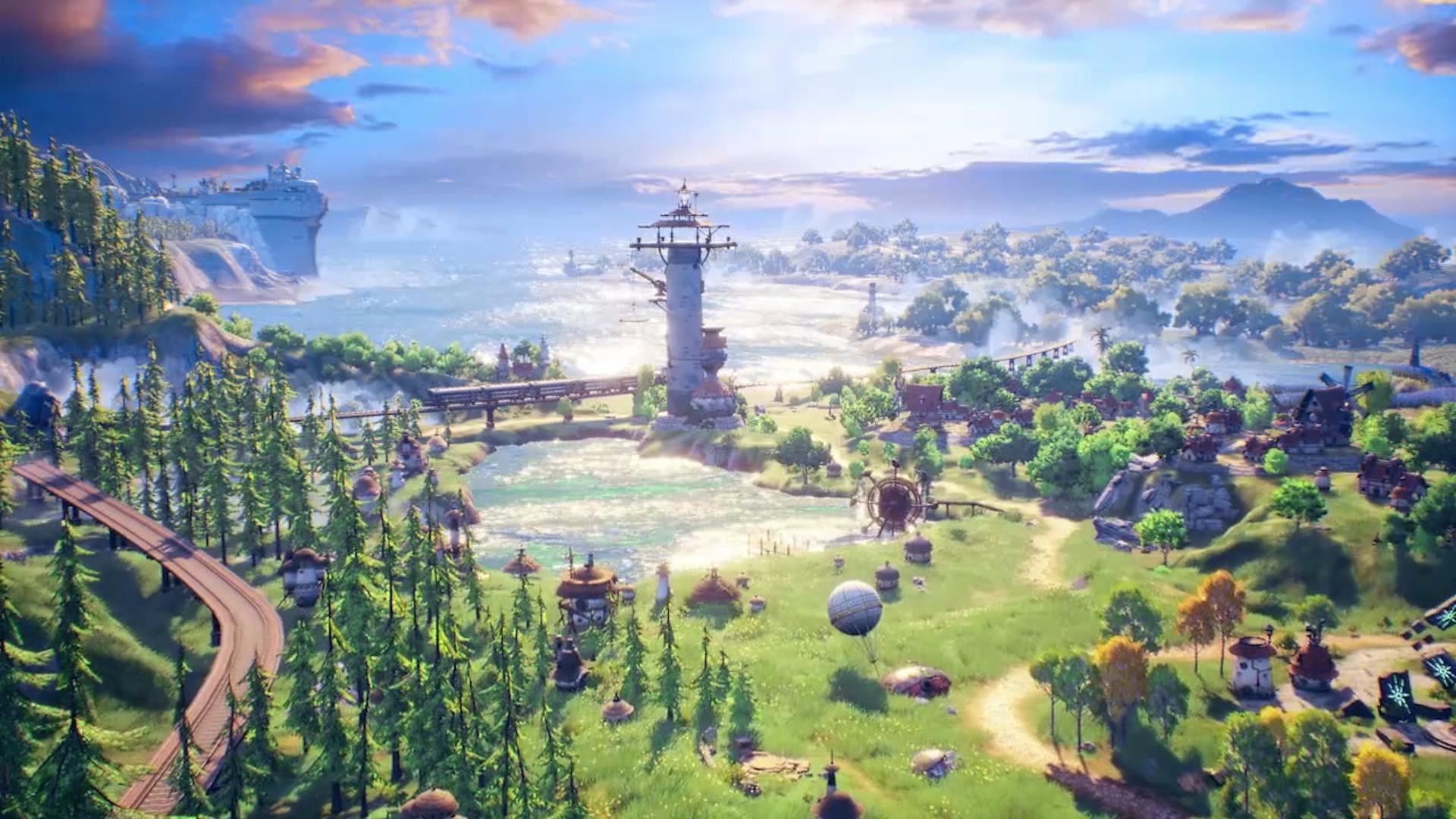
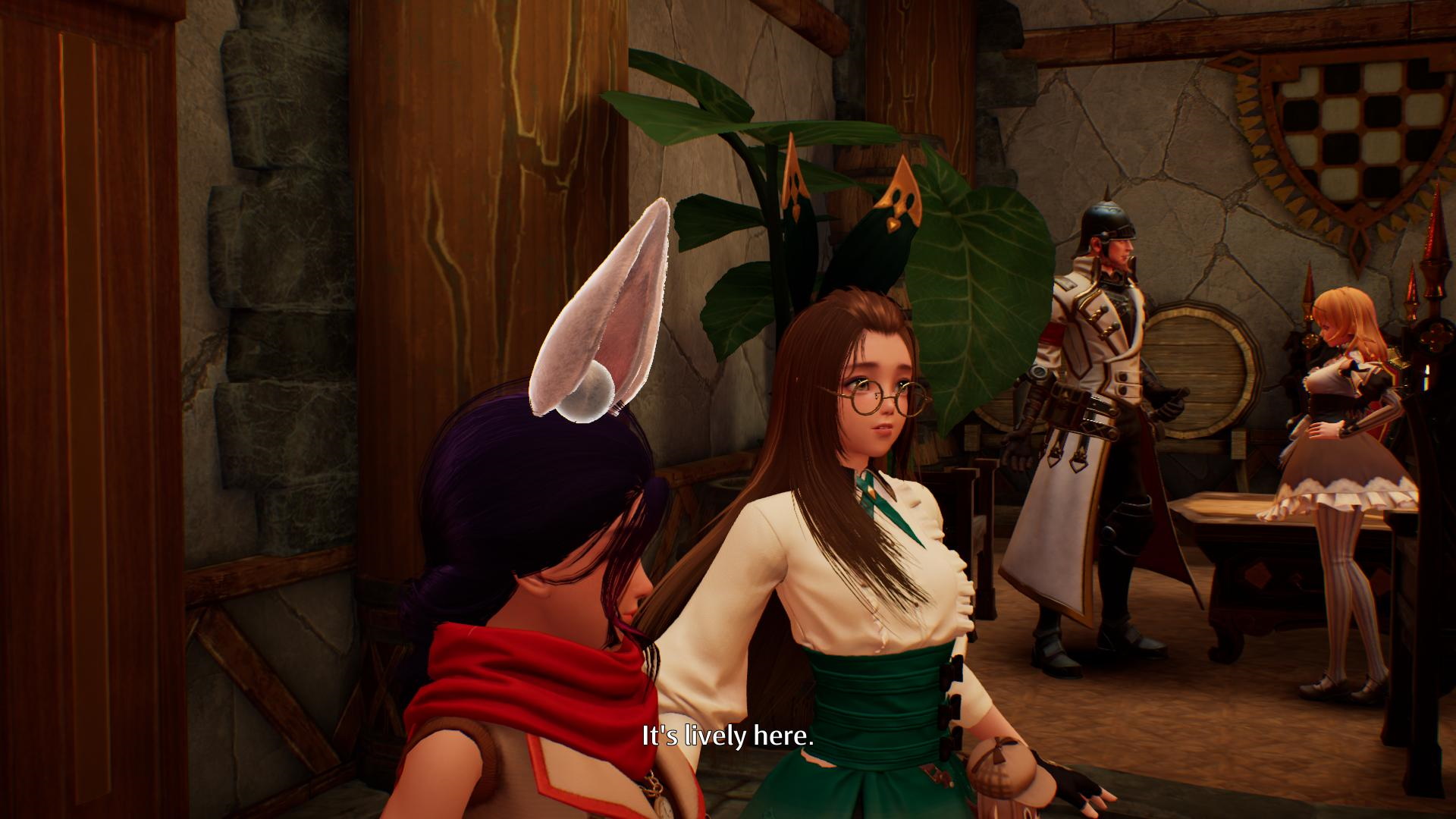
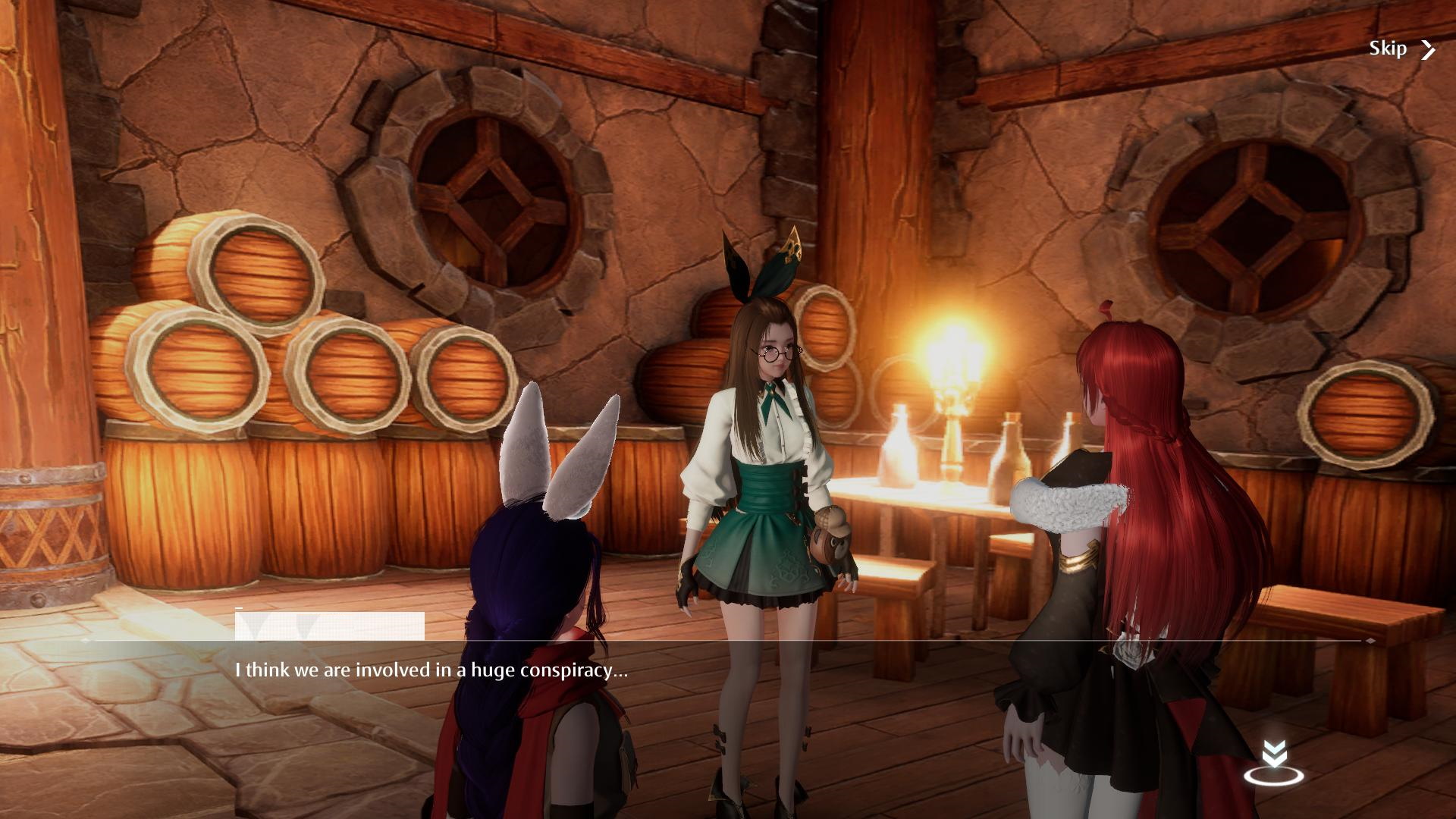
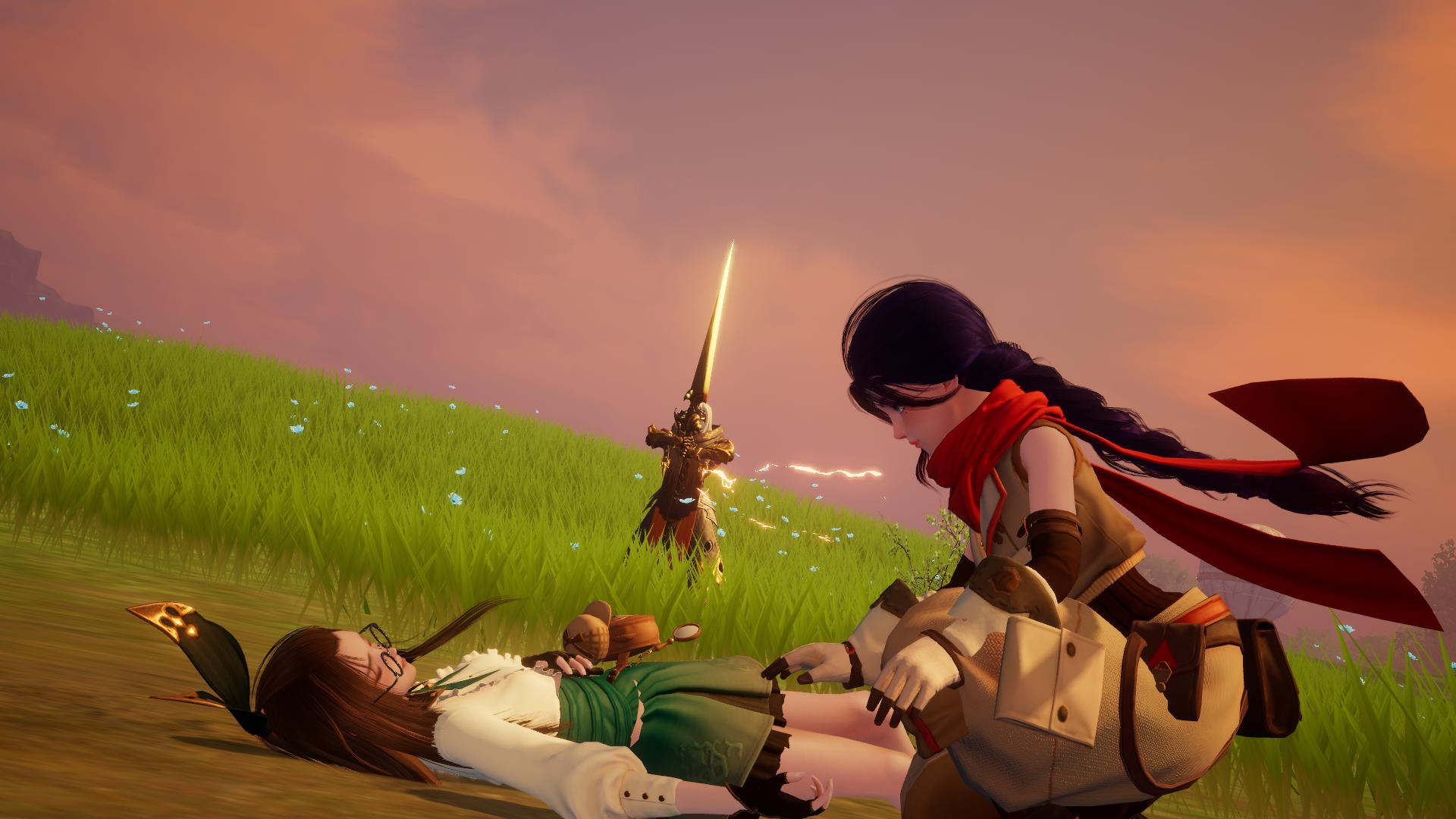
Five hours into Wuthering Waves and I have a lot to say about the game. And to show. I've taken so many screenshots, some for the pure pleasure of looking at them, others to use in posts like this one.

It's a familiar process. Some new games just spark a huge desire in me to analyze, discuss and deconstruct. It's part of Bartle's Explorer archetype, which apparently covers much more ground than the merely geographical.

Let's start with the thorny question of sound quality, as discussed at some length in the comments by myself and Naithin, to whom, incidentally, many thanks for drawing my attention to this really rather good game in the first place, although how the heck I hadn't heard of it before, since it seems to be a Really Big Deal, I can't quite figure out.

By the way, did you know all the voice work was done in the UK? I didn't until I saw this video. It explains a lot!

I don't know if that's a factor in the less than perfect recording quality. Naithin's investigation into the Japanese original suggests not. I'm not bothered by it the way Naithin is anyway. Although, now I'm really making myself listen to it with recording fidelity in mind, I can hear the over-tuned top end, which does occasionally remind me of the sibilance and hiss of the cheap microphones my band used back in the 'eighties.

The aspect of the voice recording in Wuthering Waves that dominates my attention, however, isn't its quality but the sheer quantity of it. I can't readily recall the last game I played that had this much talking. Or, I should say, the last game I played that had this much and wasn't a visual novel.

Wuthering Waves calls itself an open world RPG and it certainly sits comfortably enough within that genre. It's very likely that after a few more hours gameplay will open out to reflect that description more closely. Thus far, though, it feels a lot more like a visual novel than anything else.

I don't think it would be much of an exaggeration to say that more than three-quarters of the time I've spent with the game so far has involved listening to NPCs talk. Of the remaining twenty-five per cent I'd estimate ten per cent has been devoted to traveling, ten per cent to making dialog choices and the final five per cent to hitting things with a stick. Okay, a sword.

Rover Speaks!

Every storyline NPC is fully voiced with the exception of the player character.  Who, by the way, no matter what the player might have wanted or chosen - absolutely is going to be called Rover forever after by everyone she ever meets until the end of the game and most likely the heat death of the universe. (Not that I'm bitter...). 

That doesn't mean the PC never talks out loud at all. I thought it meant that but I was wrong. When I posted yesterday, having played for a couple of hours, I was under the impression the PC (Or Rover, as we shall now call her, since why fight it?) was one of the genre's many Silent Protagonists. She'd shown a nifty line in nodding and head-shaking but up to that point hadn't made a sound.

Imagine my surprise then, when in the middle of a conversation she suddenly began to speak out loud in a husky, vaguely American-accented drawl. It made me jump. After that, she went back to being silent for long enough to make me think it was an isolated outburst until, once again for no particular reason and no warning, she suddenly found her voice again.

Now I never know whether she's going to speak or not. It's disconcerting but also quite exciting. And honestly it's a bit weird she doesn't talk all the time because even background characters not directly involved in the storyline sometimes have conversations out loud. Long ones, too.

I'll give you an example. When Rover and the gang (Did I mention she travels in a pack? And they all chip in with comments whenever they feel like it? It's like a road movie, sometimes.) went to see a big shot scientist, they found him already in conversation with two of his investors. 

You're asking for a slap, girl!

I think I could have interrupted them and got straight on with the plot but I wanted to see how long they'd go on without me. A long, long time is how long. Long enough to go through an entire sub-plot that told me quite a bit about the character of the guy I was about to do business with (Spoiler: he's a bit of a dick.) 

Someone had to write and record all of that dialog. There must have been several minutes of it. All for a bit of character-building that most players probably click straight past.

So far, the whole game is like that. There are plenty of NPCs out and about in the city and every one with a name talks. Not aloud. They haven't voiced every last one of them. But they all have dialog, some of it quite extensive. And often interesting. 

I have seen this sort of thing in other games but Wuthering Waves really goes for it. I think I'm noticing it more because of the quality of the translation, too. Five hours in, it remains well above average, although I have noticed the odd verbal infelicity now and again. It does make me wonder how good the stories in other imported games might have been in their original languages. 

Some rando wanted to talk about his dreams. You know how that goes.

I suspect many of them were much better than their terrible translations made them appear. I'd say I couldn't understand why companies are so willing to skimp on the translations except I think I know the reason: most players will just click straight through the talking to get to the fights anyway, so why bother spending money on getting the nuances right?

I'm not one of those players and I've paid for it time and again in games where I could barely work out what the plot was supposed to be, let alone extract any sense of characterization or world-building from the gibberish I had to plow through. It's a real pleasure to be able not just to follow the storyline but to gain some insights into the culture and circumstances in which the narrative takes place.

How much of what I'm hearing and reading has any meaning or significance beyond building ambience and atmosphere is a lot harder to say. Some of it seems quite surreal. 

I spoke to a young girl who wanted to tell me in considerable detail about "the hamster at Lollo Logistics". At first she seemed to be talking about a real hamster but she went on to describe how someone in a hamster suit "saved" her. She ended up proclaiming "People who wear hamster suits are always good people!"


Is this relevant? Do I need to know it so I can react appropriately when I meet someone dressed as a hamster somewhere down the line or is she just rambling on about some TV show she likes? Maybe it's special pleading from a writer who likes to dress up as a hamster on weekends. I mean, I'm fine with that, if so. I'd just like to know.

I only heard all that hamster stuff because I randomly chose to go up to that girl and press F. And I only did that because I happened to land next to her when I jumped down off of a giant statue of a temple dog that had had its head replaced with a security camera. And I was only on top of the statue because I'd climbed up there to take a selfie next to a white cat that was up there already.

Of course, I'd only done that because I was taking selfies next to all the cats and dogs I passed. The cats roll over or stretch or skitter around chasing something only they can see. The dogs you can pet or tell to sit. You can feed them if you happen to be carrying a hambone, which so far I have not been.

I might one day, though, because I found the cooking station and the food vendor. I said yesterday the game has crafting and now I know what one of the crafts is: cookery. You can make food that gives various buffs to Rover and her pals. Since I've also seen ore nodes and wood I'm guessing there are more crafts than just cooking but so far I can't prove it from personal experience.

Changing topic, because why even pretend there's any through-line here, another thing I like very much about Wuthering Waves is the way it contextualizes routine RPG behaviors and thereby makes them feel less insane than usual. I alluded yesterday to the Magistrate's extreme youth for someone holding the position she occupies. I just took it for granted it was a genre trope but apparently it seems as strange to some of the citizens of the city as it would to us:

La La La ! Not listening!

What's more, if you take the middle dialog option, the one that puts the best possible slant on the Magistrate's position, Yanyyang comes back at you, suggesting you may be overly invested in not hearing anything bad about the town's senior administrator.

Administration is something of a theme here, too. The city is under military protection, if not direct control, and the need for documentation, permits and authorization comes up repeatedly. 

When you get to talk to the Magistrate, the most helpful thing she does is to give you a Pass that authorizes you to visit all parts of the region, many of which are currently off-limits due to the ongoing war. That explains how you can travel freely wherever you need to go but a later conversation with two gate guards, the first time you present your authorization, goes further, explaining the restrictions in place and the reasons for them, as well as the limitations on your own authorized movements (Spoiler: there are none!)

Cultural and societal explanations for game mechanics crop up repeatedly. I've seen that in other games but this goes further than most, sometimes subverting or over-turning expectations. For example, I can't remember seeing another companion NPC who not only can't always go adventuring with you because she has a job but who leaves in the middle of an adventure because she needs to start her shift. 

It didn't happen just once, either. It's almost like these people have lives that don't involve being at your beck and call 24/7.

I'm standing right here, guys...

I'm not suggesting Wuthering Waves is unique in any of these respects or even all that unusual but it does seem to be willing to go the extra mile and then some in making everything feel... I want to say realistic but I think the word I'm searching for is convincing.

It often surprises me just how much background detail games developers feel worth putting into their work. I wonder who they think sees it all and why they do it? 

My guess it's partly because it's expected of them but mostly because they get so caught up in their creations they find them endlessly fascinating. Whatever the reasons, this kind of world-building does contribute hugely to the sense of investment I feel in so many games when they're fresh and new. If they're there, I find myself getting drawn into the complexities but if  they're missing I feel loose, untethered, disconnected. Sometimes I end up wondering why I'm there at all and that's the kiss of death for engagement.

Good world-building is likely why I end up writing far more about games at their beginnings than through the middle or, especially, the end. The interesting stuff, to me, is often heavily front-loaded, not just in all the systems and mechanics that need to be understood but in the wealth of cultural cruft that collects around the big, starting cities and the opening stages of the storyline, the time in the game when all the main players need to be introduced and the stakes made clear.

Peace and quiet at last!

Later, things tend to thin. The storyline condenses, the narrative threads cohere. Regions and cities begin feel less vital, less complete. Things in general seem to be there more because they serve a purpose than that they simply exist. It's no longer a world but a gameworld.

At least, that's how it goes in the games that don't take off commercially. Three to five years of development and resources go into the base game, especially the opening stages, the sales window as it often needs to be, making those aspects feel so much more finished than what comes later, especially when diminishing funds and resources mitigate against maintaining the same level of effort after launch.

It does make starting new games a more appealing prospect than sticking with them, something that's often raised as a problem for the industry. Not so much for me, though. If they keep making games like this, I'll keep trying them, getting excited about them, writing about them, then dropping them when I've seen as much as I want. 

I've only been playing Wuthering Waves for a couple of days. I think I'll carry on for a while but for how long I wouldn't like to say. It's hard to predict. I only lasted about a month in Genshin Impact but I played Noah's Heart for over a year. Clearly quality isn't the only factor in play.

Thus far, though, the indications suggest I'll be sticking around for a while. And posting about what I find, no doubt. Always a bonus!

Friday, July 29, 2022

Noah's Heart: First Impressions

Noah's Heart is a brand-new, open world mmorpg, developed and published for Android, iOS and Windows by Archosaur Games, best known (If at all.) for Dragon Raja. It uses Unreal Engine 4 and has server clusters in the EU and North America.

The game launched on mobile only in Europe a couple of weeks ago and globally on all platforms yesterday. It uses a free-to-play payment model and currently ranks #2 in the Free Role Playing category on the Google Play Store and #4 in Role Playing on the Apple Store, with ratings of 4.6/5 on both.

I've played the PC version for a little over three hours, including pre-launch character creation. My character is Level 31and some way into Chapter Two of the main storyline. These are my early impressions: 

It's good. I like it. 

Oh, you want more? Okay. 

It's hella similar to Genshin Impact, for a start. Remember when it came out and everyone went "Wow! That really raises the bar"?  We were right. GI went on to make an absolute fortune and it's clearly the benchmark now for any developer hoping to be taken seriously in the all-platform-F2P-Open World-RPG stakes. That's something we should all celebrate.

That said, Noah's Heart isn't as instantly impressive as Genshin Impact and not only because it didn't come first. The aesthetic, while delightful, is less well-defined and the graphics, while gorgeous, aren't as sharp. 

Whether the world is as deep and fascinating, it's a little too early for me to judge, not least because at Level 31 I've seen barely any of it. The world is, presumably, vast. A tool tip on a loading screen mentioned eight continents and hundreds of islands. So far, all I've seen is some random countryside, a city and the inside of several very small instances.

I'm coming for you, Heidi!

The reason for that is the story, not that it's especially compelling, thrilling or even interesting. It's definitely not. So far, it's very much a by-the-numbers anime mmo plot, involving the usual princes, kings, charming rogues, handsome officers and an unfeasible number of very young women in unsuitable outfits running every which way whenever you turn around.

The dialog is nothing out of the ordinary, either. I've played quite a few imported titles where I got the strong impression the writing would have been laugh-out-loud funny in the original language. I doubt that's the case here although the translation is just shaky enough cast some doubt. 

I ought to make it clear at this point, in case anyone reading this is unfamiliar with my established perspective, that I tend to think of shaky translations as a feature not a bug. The nuances of language exposed that way are endlessly fascinating. 

You don't get out much, do you?

I'd take just about any limping, broken-backed attempt at rendering one culture's demotic take on familiar fantasy tropes into the vernacular of another over the dull, plodding, worthy Heroic Prose of many a game's native English text. Your mileage, as they may or may not say in Seoul, may vary.

By similar inductive reasoning, I also have considerable time for voice actors who give oddly-inflected line readings, which is just as well. I'd rate the voice acting in Noah's Heart as competent at best, pedestrian for the most part and occasionally downright peculiar. 

At one point I was all but convinced one of the NPCs was being voiced by some kind of text-to-speech app, the inflections were so robotic. Then, in the next scene, the same character began speaking with recognizeable and appropriate emotional emphasis. Did the director have a word with him or did someone tweak the settings on the AI? We'll never know.

Ya think?


If the plot isn't anything special and the acting isn't either, why have I done virtually nothing other than follow the storyline for the whole three hours I've been playing? Oh, several reasons...

  1. There's one holy heck of a lot of it.
  2. It's relentless.
  3. Seriously, it never stops.
  4. And its all cut scenes.
  5. So. Many. Cut scenes.

Even so. Surely I could have just ignored it and done my own thing? Well, yes I could. There's nothing to stop you doing that, if you want. Only I didn't want.

Drama! Excitement! Threat! I was there! (Watching)


The fault is entirely my own. I feel quite guilty about it. In former days, I would never have allowed a game to direct me so forcefully. I'd have veered off the intended path and made my own way, ignoring the story altogether if need be. 

In those days, though, there wasn't a single button that played the game for you. In Noah's Heart there is and I love it.

I've always apreciated mmorpgs with an autoplay function. Who wants to find their own way to anything, amiright? I mean, you guys have satnavs, don't you? The problem with automated questing systems tends to be that they only do half the job. They run you to where you have to be next but then they leave you to do all the work. 

Noah's Heart has possibly the best autoquesting I've seen. I've used it for the whole questline so far and it hasn't made me irritable once. All I do is click on the quest in the onscreen quest tracker and my character trots to the next NPC and opens the dialog window. If there are teleports to take, she takes them. If it's a long way, she summons her horse, jumps on and rides. 

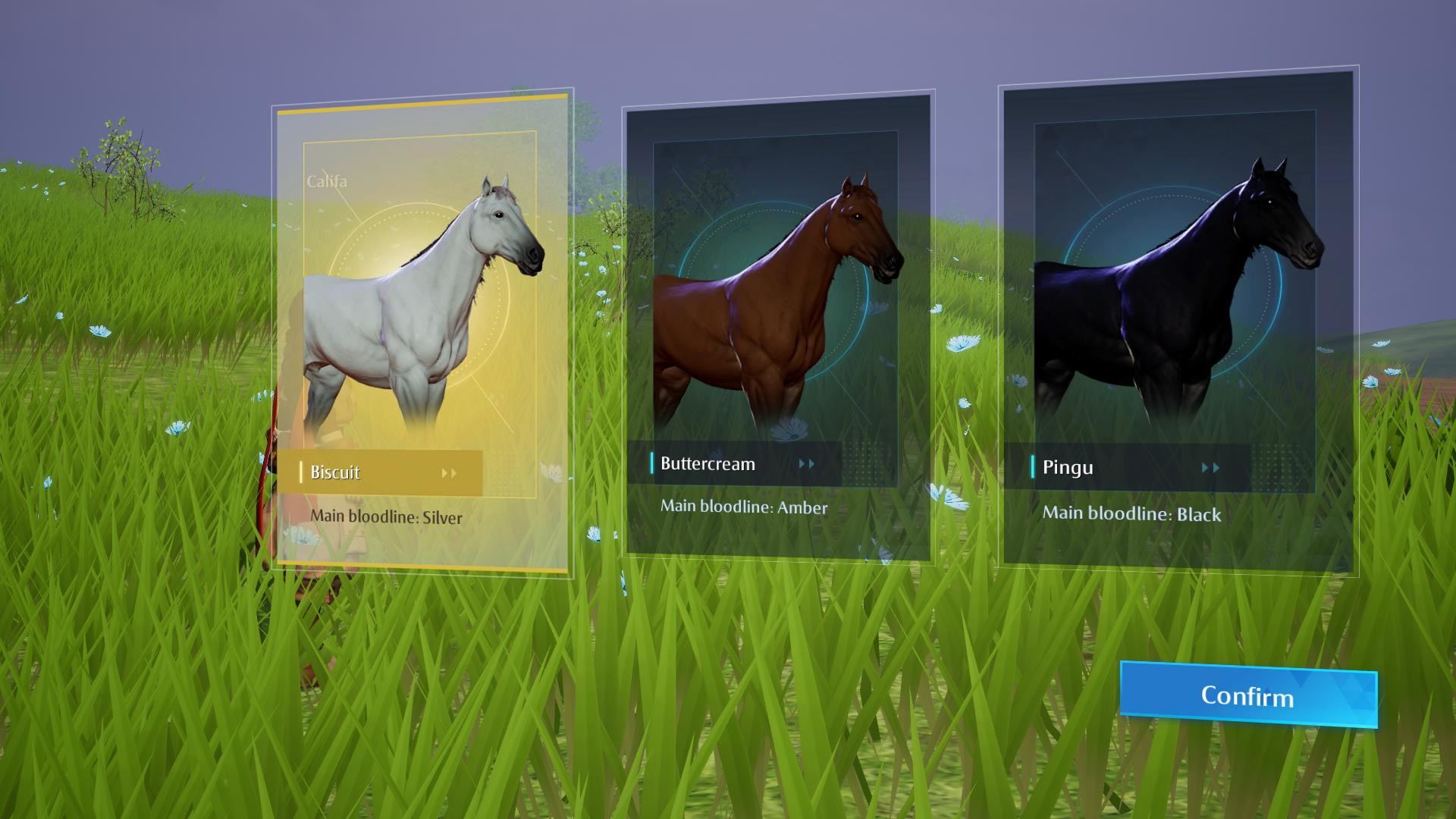
Speaking of horses, whoever came up with those names deserves a raise. Either that or they need to go back on their meds. I'm not sure which.

It's slick, smooth and strangely soothing to watch. Let's be honest, it's fricken' addictive. Given the extreme quantity of cut scenes and the paucity of combat quests, it feels less like playing a game and more like watching a somewhat shambolic anime - from the inside!

Sometimes you even get to "control" the characters within the cut-scenes, something I can't recall ever doing before. There was one part where my character and three of her pals had escaped captivity and were running through a castle courtyard and a button popped up on screen for me to press so each of them in turn could somersault over a barrel or slide under a haywagon. 

It felt like we'd segued into some sort of make-your-own-movie game and, honestly, it worked really well. I'm not sure what would have happened if I'd declined to press the button at the appropriate moment but it never even occcured to me to find out. I was sufficiently invested to want everyone to get away, which I guess means the story's better than I thought it was.

Although who I'm supposed to attack in here escapes me.

Mention of on-screen buttons brings me on to the UI and the control system. It's good, or at least it's good for me. 

In these days of center-screen targeting and action controls, new mmorpgs where you can do everything with the mouse are hard to come by. Noah's Heart is one of those, not because Archosaur has gone full WoW-style for the PC release (Although it does have tab tagetting.) but because all they've really done is kept the mobile controls and mapped them to the keyboard as an option.

There are large circles or icons for all the relevant actions on screen in the lower right corner, where your thumb would go on a tablet or phone. They're all neatly labelled and swap themselves in and out according to context. 

If you play by keyboard you might find the key choices a little weird. I know I've never seen K and J as primary and secondary attack before. They're all remappable, though, and you can just click the on-screen buttons with the mouse pointer if you prefer - which I very much do.

Every instance boss takes a moment to pose for photos just before the fight begins.

As a result, I was not only able to win every fight in every storyline instance so far, I was able to do it while meeting all the requirements for all the bonuses. Such a thing may never have happened before, although it may also be because the fights so far have all been incredibly easy, even the bosses. The bonus criteria specify "No more than two heavy injuries" (Or something like that. It means getting knocked out after losing all your HP, I think.) but so far I've yet to go under about 90% health at any point.

I seem to remember Genshin Impact was also easy at the early stages but that's presumably to boil the frog. Like GI, Noah's Heart is a gacha game, where the company hopes to make a fortune by leading you into a debt spiral of purchases, in this case of "Phantoms", the collectable NPCs who fight alongside you. 

Unlike Genshin Impact, however, so far there's been very little combat at all. The whole "kill ten rats" part of the package seems to be entirely absent. I've barely seen an attackable mob outside of the storyline instances, far less been sent to kill one. Even inside the instances there have only been one or two groups of enemies, easily disposed of, before the boss.

One of the very, very few mobs I've had to kill for a quest.

Presumably things will get harder - much harder - as the game progresses, although I kind of hope not. It's been a charmingly laid-back experience so far and I'm in no hurry for that to end. 

This First Impressions post is going to stop now, though. Not because I don't have anything more to say - I have plenty. Barely scratched the surface! I'm just going to save it all for Blaugust, which starts on Monday. New games always give me a ton of ideas for things to write about so the timing couldn't be better. 

With luck, Noah's Heart might last me all month. I played Genshin Impact longer than that and this feels like a rerun. Or maybe a cover version. And I do love my covers.

Wednesday, November 18, 2020

Truce

It's a bit of a tradition here at Inventory Full to write a review, of sorts, every time I finish a Living Story episode in Guild Wars 2. I've posted something after just about every Living Story/World/Saga update since the game began but I can't remember ever having less to say about one than I do about yesterday's "Champions: Truce".

No-one seems especially stoked this go round. Time was, when a new episode or chapter was looming, you'd hear people talk about it in game. There'd be multiple forum threads speculating on what might be about to happen and I'd read (and write) blog posts fueled by nothing more than the trailer and a heady sense of anticipation.

For a long while now it's been entirely possible to log in and play a full session without hearing even a passing mention of the latest update. It's true I don't hang out much in the metas but there was a time when people in the starting maps talked of little else on patch days and I'd hear commanders in World vs World complaining they couldn't defend a keep because everyone was off doing the Living Story. 

Those days are long gone. All you hear now, if you hear anything, is the odd derisive comment. As for the forums, gone are the multiple discussion threads that Gail Gray used to have to consolidate. Gone too are the official feedback threads that once ran for several pages and had to begin with an official request for posters to keep things brief.

Instead, when I went to the forum today to check if anyone else was having the same trouble with one of the events I was, I had to look twice before I found any threads at all. There's one called "What do you think of the new Living World: Champions? (Spoilers inside)". It has sixty-six comments and it's been viewed thirteen hundred times, which I guess isn't all that bad for an update that hasn't been live for twenty-four hours. Or it's not until you read it.

Not in my house!


If I had to summarize the opinion most commonly expressed in the thread in a single word, that word would be meh. Or maybe bleh. 

"About what I had expected. I figured that they had pulled their living world teams to work on the expansion so this was a low effort way to provide content until it releases."

"All in all, I'm actually surprised it's even more bare bones than expected... The only good thing is I can commit my time to other games now this isn't going to demand anything from me."

"I didn't expect much and at least it was not disappointing in that regard."

"It is as bad as we feared... Luckily Shadowlands is right around the corner".

"It's okay. It didn't blow me away and it didn't disappoint me."

"Good idea, bad execution, too tedious."

"...it's underwhelming, even with my expectations low."

Those are probably some of the more positive ones, too. There's a widespread assumption that anything we get between now and the launch of End of Dragons is going to be the work of a skeleton crew trying to cobble something together while ninety-nine per cent of the teams work on the third expansion. We can't expect much and not much is what we're going to get seems to be the general feeling.

There's also a fairly commonly expressed opinion on the forums that the Icebrood Saga has been generally poor in comparison to previous seasons. I'd take this with several buckets of salt because you could have heard a similar sentiment being expressed during every one of the five seasons to date. (It is five, isn't it? Hard to keep track since they keep changing the name).

What does puzzle me is what seems like a growing tendency to compare the Icebrood Saga to Living World Season One. I've read this a number of times, almost always couched as a criticism, but I'm not clear whether the supposed similarity is in the story or the gameplay. 

I can't say I can see much of a correlation in either. I wish I could. I liked Season One well enough at the time, as my contemporary commentary demonstrated, but if I'd known what we were going to get next I'd have positively raved. Scarlet's War seems like a golden age, now.

Is there something you'd like to tell us, Jormag?


Perhaps the two seasons do have something in common, even if I'd struggle to articulate exactly what it might be. If I was going to put the seasons in order of preference I'd have Season One at the top but the Icebrood Saga would come next, which does suggest they at least both pander to my personal tastes. 

Does that mean I like this episode, then? Champions? 

Eh, well... I guess... It was... okay. Y'know?

It was surprisingly good to have voice acting back. When we got the first silent episode, courtesy of the pandemic, I quite liked just reading the text but I found I was hearing the familiar actors' voices in my head anyway. The novelty wore off fast. 

I'm not sure I'll go back and replay the last two episodes just to hear the dialog out loud but I definitely will watch it on YouTube if someone edits it all together. A few years back you could have counted on someone doing that. Not so sure anyone's got the motivation any more.

The plot's quite interesting. Some people don't like the very idea that we might be about to team up with an elder dragon, specifically Jormag, but a lot more don't like the way it's being handled. The rationale behind it certainly is vague and confusing but I think that's deliberate. 

Jormag, as Braham points out, is the master of lies. I can't think of a non-binary term for that or I'd have used it. And Taimi, lest we forget, is living with a terminal diagnosis. If she's being less rational than usual... well, come to think of it, how rational is she, ever?

That's sarcasm, right? Just so we're clear.


I had more of an issue with the ease with which just about everyone accepted Ryland's assistance. Isn't he subject to some kind of war crime tribunal? Does being Jormag's Champion give him a pass on that? Yeah, well, I guess it does, at that.

The plain fact that I can sit here and discuss this (with myself) a few hours after playing through the episode suggests the story is working better than it has in the past. Sometimes I get to the end of a chapter and can't even remember how it started, let alone how it fits in with what came before. The Icebrood Saga, though, I feel I could write a coherent precis for, if I had to.

Other than the acting and the story, Champions doesn't have much going for it. There's some fairly desultory combat in the early sections and some exceptionally tedious and long-winded slog to get through at the end. Full disclosure, I haven't even done all of that yet.

The episode concludes with three missions using the not very popular "Private/Public" instance format. I tried to do the first solo, supposedly an option, and had to give up due to sheer boredom. There was no risk of me not being able to finish it - it was just going to take me about an hour to kill the boss and I couldn't bring myself to do it.

That, I should add for anyone who might have been reading the patch notes, was after they fixed the bug that made the mission bosses far slower to kill than they were meant to be. What they must have been like before, I don't care to imagine.

Second time around I took the "Public" option and completed the first of the three missions relatively painlessly in about fifteen or twenty minutes. It was still tedious but it was bearable. Put that on the poster!

You noticed?


There are two more missions to complete before the chapter can be considered finished and from what I've read they're functionally identical to the first. I'll get them done eventually but I can't say I'm keen. After that I imagine I'll never see them again, even they're supposed to be our repeatable content for the next couple of months.

I believe ArenaNet have done a better job than most of their competitors at keeping older content in play but I suspect we may be reaching a point where they're becoming the victims of their own success. GW2 has a staggering amount of repeatable content now, all of it with its own metas, currencies, dailies and achievements. It's almost self-defeating. If no old content ever goes out of date is that any different from if all of it did?

One thing you don't hear too much of is people complaining about being ripped off. The general feeling, as expressed in some of the forum comments, seems to be that this is about what you can expect for nothing, which is, after all, what we're paying:

"I'm... fine logging in every 2 months or so to check out the story progression"

"I am unsatisfied but on the other hand it was for free, so hey..."

"I've pretty much stuck with logging in on release days and then disappearing till the next. It's honestly more enjoyable that way".

I'm not sure that kind of lack of engagement is what any developer wants to hear but, honestly? It does kind of work for me, too. Sure, I'd love to be swept up and blown away by an mmorpg, the way I was by GW2 itself eight years ago. I just don't expect it any more. 

It's actually quite convenient to get occasional content drops that pique my interest for a day or two - maybe a week if it's really good - then for the game to go on the back burner again. It's not how this hobby used to be but then I'm not the person I was when I discovered it, either. I'm twenty years older for a start.

Maybe we don't get the games we want. Maybe we get the games we deserve. And I'm not sure how many of us have the capacity for engagement we had when the genre was new. Maybe meh is about all we can handle. I mean, when was the last time you heard anyone yell "Woot!" ?

Thursday, October 8, 2020

She Bad?


Genshin Impact
opens with a short action sequence before dumping your character in media res without further explanation. About the first thing thing you notice is that you've somehow acquired a choric companion who goes by the name of Paimon.

Paimon took me more by surprise than perhaps the writers intended. It's a name I'd only encountered once before, in one of my very favorite novels, Flora Segunda of Crackpot Hall, which I happened just to have re-read a matter of weeks previously. Paimon is both a denizen, a kind of quasi-immortal being, and also the butler at Bilskinir House. When first met, he's described as wearing "a blindingly white flannel suit and white patent leather shoes, long and pointy, like loaves of bread". He has tusks and a long moustachio in "a lovely shade of velvety blue".

As she explains in an entry in the Califa Police Gazette, author Ysabeau S. Wilce was "purposely vague" when describing Paimon, "focusing on parts instead of a whole". I pictured him as a djinn-like figure, blue and massive, standing maybe eight feet tall. Graphic artist Lea Hernandez imagined him as a stern, blue, canine Southern gentleman; Tennessee Williams as a dog. 

Actually? Not so much as you'd think.


Although Ysabeau Wilce's works are a palimpsest of research and erudition, filled with found references from all kinds of historical sources, arcane and mundane, it hadn't occured to me that the name Paimon might have risen from anything other than the pure spring of her fecund and baroque imagination. I'd never come across it anywhere else.

Imagine my astonishment, then, to be faced in Genshin Impact by a two-foot high floating toddler with a chipmunk voice and a sarcastic tone, going by the very same name. It seemed too much of a co-incidence to be, well, a co-incidence. And it's not.

It turns out that Paimon was - or is, I guess - "a spirit named in the Lesser Key of Solomon (in the Ars Goetia), Johann Weyer's Pseudomonarchia Daemonum, Collin de Plancy's Dictionnaire Infernal, the Livre des Esperitz (as "Poymon"),the Liber Officiorum Spirituum (as Paymon),The Book of Abramelin, and certain French editions of The Grimoire of Pope Honorius". That's one hell of a lineage. Appropriately so, since Paimon is "quite obedient to Lucifer".

Oh, I think you know.

Knowing the derivation puts a new spin on both characters. In the book, the denizen Paimon is a somewhat terrifying character. In the game, very much the opposite. And yet, in each the choice is freighted with nuance. 

Flora Segunda is ostensibly a children's book although the greater fictional universe of Califa extends well into adulthood, particular in the exemplary collection of short stories, "Prophecies, Libels & Dreams: Stories of Califa". Genshen Impact appears to be a fluffy, cheerful anime-inspired video game that looks and plays young, and yet it has grabbed the attention of millions of adults around the world.

Many children's books and many fantasy-themed video games draw their imagery, inspiration and iconography from spiritual and mythical traditions. It's not especially unusual for demons and devils, even named Princes and Powers, to find themselves translated into cannon fodder or arch-villainry. It is, I would suggest, somewhat less usual for them to appear as trusted friends and helpmeets to the protagonist.

You said it, not me.


And it made me wonder. Is Paimon to be trusted? Paimon in Genshin Impact seems so innocuous, so naive and innocent. She looks like a small child. She talks like a small child, albeit an acid-witted, precocious one. But what do we really know about her?

When the action begins, the Traveller, the character that comes closest in Genshen Impact's asymmetric character design to something that might pass for a traditional player avatar, is already keeping company with Paimon. There's a passing reference to them having been together for three months or so. 

Clearly, some significant amount of time has passed since the events of the opening scenario. A bond of some description has been forged between the Traveller and Paimon but how and why goes unexplained. The relationship is difficult to draw out, not least because Paimon does almost all of the talking, not only in supposed conversations between the player and herself but also in almost all of their interactions with other actors in the game.

Like you really care what I think, Paimon.


Over the years there's been much discussion of the ways a player character can enter into conversation with non-player characters in the gameworld. We've picked over the strengths and weaknesses of silent protagonists, multiple choice responses and branching decision trees. I'm not sure I can remember a game that handles dialog quite like Genshin Impact.

Paimon does most of the talking, most of the time. If there's an open conversation she'll insert her opinions at every opportunity but even when, as happens quite frequently, an NPC directs a question squarely at the player character, it's Paimon who'll reply.

This doesn't feel unnatural becuase Paimon very convincingly replicates one of those friends we've all had, someone who seemingly lacks the self-awareness to realize that not everything revolves around them. 

Um, hello? I'm right here!


It seems like Paimon never stops talking. The sheer amount of voice work is staggering. If she isn't making snap decisions or snippy observations she's monologuing her own thought processes. She talks exclusively in the third person and at a pitch that verges on the excrucuating, either or both of which may or may not be an intentional alienation device.

With all this going on it's easy to slip into the belief that Paimon is merely a cute mechanic inserted in the game to make it even more child-friendly than the colorful graphics and funny creatures already suggest. And yet...

Why call her Paimon? Why do so many NPCs pass comment when they first encounter her, apparently never having seen anything like her before? What's with the running joke about Paimon being an emergency food supply? That's "being" not "providing". The Traveller, Paimon herself, the master chef Xiangling, they all make jokes about eating Paimon. Xianling even refers to Paimon as "it". 

"Friend". It's such a strong word, isn't it?


Paimon in Genshen Impact reminds me strongly of the Black Spirit in Black Desert Online. They both facilitate the player in numerous ways within the game, specifically in providing a lore-supportive conduit for meta-actions like opening game windows and manipulating UI elements. As I understand it, the Black Spirit goes on to play a significant role in BDO's storyline. It seems, even at this early stage, that Paimon may do the same.

At a glance, the two have little in common. The Black Spirit is sinister from the outset. It's openly parasitic, amoral, opportunistic and scary. Paimon is the exact opposite, cute, bubbly, friendly, unthreatening. Do I trust her? Hell, no!

Genshen Impact is one of the best-written video games I've played. I'm mulling a post on why I believe that's true. It's a hard one to pin down because the quality of the writing resides above all in the tone, the very thing so few video games get right. It makes it surprisingly tough to tease out what's happening when one does.

What's wrong, Paimon? No smart remarks?

Paimon is a great example. Nothing about her is explained. It's all implied. Or suggested. If it wasn't for the deft way some of the more explicit plot twists have revealed themselves already, I'd think I was imagining it. The things I've seen so far, though, they give me confidence the writers know what they're about.

I hope so, anyway. Writing as fluid and effective as this is a rarity in games I play. It'd be nice not to be disappointed for once.

Wider Two Column Modification courtesy of The Blogger Guide